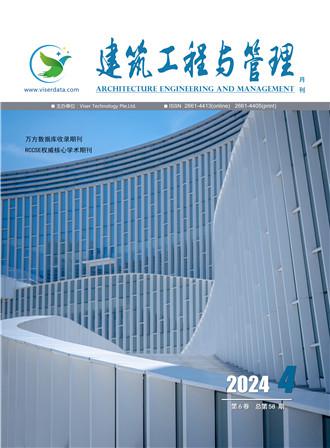
Architecture Engineering and Management
Architecture Engineering and Management was found by Viser Technology Pte. Ltd. in Singapore. The journal pay much attention to quality of paper, strictly select manuscripts and follow normal standard of layout. The journal, a high-level academic , is deeply favoured by postsecondary teacher and scientific researchers. As a journal of open access, the journal dedicated to publish high quality academic papers of construction. Meanwhile the journal provide a platform of communication and information exchange for engineering technicians and professionals. All journal’s papers are indexed by websites such as WANGFANG DATA and Viser Technology Pte. etc.
Open Access Policy
This journal provides immediate open access to its content on the principle that making research freely available to the public supports a greater global exchange of knowledge, published as open access. Authors retain copyright but licence exclusive rights in their article to the publisher, authors have the right to:
- Share their article in the same ways permitted to third parties under the relevant user licence (together with personal (scholarly) purposes to create certain derivative works), as long as they give proper attribution and credit to the published work.
- Retain patent, trademark and other intellectual property rights (including raw research data).
- Proper attribution and credit for the published work
Creative Commons Attribution-NonCommercial(CC BY-NC-ND):
Allows users to copy and distribute the Article, provided this is not done for commercial purposes and further does not permit distribution of the Article if it is changed or edited in any way, and provided the user gives appropriate credit (with a link to the formal publication through the relevant DOI), provides a link to the license, and that the licensor is not represented as endorsing the use made of the work. The full details of the license are available at https://creativecommons.org/licenses/by-nc-nd/4.0/.
Editorial Policies
Peer Review
Viser Technology Pte. Ltd. follows a double-blind peer-review procedure for submissions of all manuscripts to its journals.
All submitted manuscripts are subjected to a fair, unbiased, and extensive peer review in consultation with the assigned journal's Editorial Board Member and independent internal or external referees (usually two reviewers), which have expertise in the field of the submitted manuscripts. The peer-review applies a short and rapid, but fair and professional assessment on all submitted manuscripts. The journal's Editor-in-Chief is then decided on the submitted manuscripts based on all the peer reviewers' comments before conveying to the author(s).
All submissions from the Editor-in-Chief will undergo independent peer-review and assess by the journal's Editorial Board Member or in-house Editor for the decision on acceptance.
Ethical Approval of Studies and Informed Consent
For human or animal experimental investigations, it is a prerequisite to provide a formal review and approval, or review and waiver, by an appropriate institutional review board or ethics committee, which should be documented in the paper. For investigations undertaken on human subjects, the manner in which the informed consent was obtained from the study participants (i.e., oral or written) should be stated clearly in the Materials and Methods section.
The authors must obtain patient consent either orally or written when they use confidential case material. However, patient consent is not required for very brief case vignettes that do not contain identifying information or if the case material is masked sufficiently to prevent the identification of the patient.
The authors should inform and discuss with the recruiting patients on the purpose(s) of publication, the possible risks and benefits to obtain, and the patient's right to withhold or withdraw consent. In the case of a minor patient, consent should be obtained from the parent(s) or guardian(s). The authors should not perform any misconduct or deceive the recruiting patients in obtaining their consent.
Standard Protocol on Approvals, Registrations, Patients Consents & Animal Protection
Human: All clinical investigations must be conducted according to the Declaration of Helsinki principles, as revised in 2000 and 2008. Authors must comply with the guidelines of the International Committee of Medical Journal Editors (www.icmje.org) in conjunction with the patient's consent for research or participation in a study. Patients' names, initials, or hospital numbers must not be mentioned anywhere in the manuscript (including figures). Editors may request the authors to provide documentation of the formal review and recommendation from the institutional review board or ethics committee responsible for oversight of the study if necessary.
Animals: All original research manuscripts involving the use of animals, the authors should indicate whether relevant international, national, and/or institutional guidelines for the care and use of laboratory animals were conducted accordingly. The authors must include details of animal welfare (such as species, number, gender, age, weight, housing conditions, welfare, training and the fate of the animals at the end of the experiment) and relevant details of steps taken to ameliorate suffering in all works in the Materials and Method section of a manuscript. Similarly, any experiments involving animals from clients or private institutions, the authors are required to get informed client consent and adhere to a high standard (best practice) of veterinary care. These details should be included in the Materials and Methods section of the manuscript.
Publishing Ethics
Publishing Policies
Viser Technology Pte. Ltd. requests all members involved in the journal publishing process to adhere to the "Code of Conduct for Journal Editors" and "Code of Conduct for Journal Publishers" as stipulated by COPE (Committee on Publication Ethics).
The publisher strictly adheres to the guidelines and best practices, which include Recommendations for the Conduct, Reporting, Editing, and Publication of Scholarly Work in Medical Journals from the International Committee of Medical Journals Editors (ICMJE) and the Principles of Transparency and Best Practice in Scholarly Publishing developed by Committee on Publication Ethics (COPE), Directory of Open Access Journals (DOAJ), Open Access Scholarly Publishers Association (OASPA) and World Association of Medical Editors (WAME).
Publications Ethics and Malpractice Statement
As a prestigious peer-reviewed journal we emphasize on publications ethics for editors, reviewers, authors, and publisher very much. We mainly follow the existing SCOPUS requirements and the Committee on Publication Ethics (COPE) Code of Conduct which are widely recognized in the world.
Peer-reviewed articles support and embody the scientific method. It is therefore important to agree upon standards of expected ethical behavior for all parties involved in the act of publishing: the author, the journal editor, the peer reviewer, and the society of TIIS.
Publication and Authorship
An authorship is generally considered to be an individual who has made substantial intellectual contributions to a publication (or an article).
Additional criteria for authorship include the following:
- Substantial contributions to the conception or design of the work or the acquisition, analysis, or interpretation of data for the work
- Drafting the work or revising it critically for important Intellectual content
- Final approval of the version to be published
- Agreement to be accountable for all aspects of the work in ensuring that questions related th the accuracy or integrity of any part of the work are appropriately investigated and resolved
All articles should be original and not published in any other journals before. If an author is using a lengthy text from another source, it should be cited within quotes and the reference should be given properly. Plagiarism or self-plagiarism in any form will never be acceptable.
An article should acknowledge and cite the work of others where appropriate, fully and accurately attributing relevant sources. In general, the article provides a list of references.
The article may acknowledge the funding, support, sponsorship and other forms of input (including that of the university, institute, organization or government) to the work in an appropriate way.
The prospective author must make sure that the submitted article is not under publication consideration or under review in another journal. We will not accept any articles with same exact material from another journal.
If the submitted article is an extended version of the article already presented in a conference, the author should address it in front page of the submitted paper and in addition, the author must submit the preliminary article published in the conference proceedings too. Unless the preliminary article is submitted, We will not accept submission for review. The extended version of the submitted article should add more than 30% substantial contents compared to the preliminary article.
Author's Responsibilities
All authors should agree to make plausible revisions to be suggested by reviewers and the editorial members. If the author refuses to do the revision without acceptable causes, the submitted article will be immediately rejected.
All authors will be required to correct any errors and to withdraw incorrect information in the submitted article.
All authors who have made a significant contribution to the article should be included as co-authors. An inclusion of person(s) who do not contribute in the co-author list is inappropriate. One of co-authors should sign a copyright transfer form before the final publication.
Peer Review/Responsibility for The Reviewers
All of the submitted papers will be peer-reviewed. The name of all reviewers will be blind. All reviewers should be academically qualified to review a submitted article, and they should complete her/his review scores and review comments in time. The review comments will be constructive for authors.
The reviewer should be fair and unprejudiced in reviewing a submitted article.
The reviewer should not have any conflict of interest with the research, author, or the research funding authorities of a submitted article. In case of a conflicting interest, the reviewer should inform the assigned editor of it and the assigned editor will manage the conflict by reassigning required reviewer(s) to the article.
The reviewer should not reveal any information related to the assigned article to other parties.
Editorial Responsibilities
The Editor-in-Chief and editor should preclude business needs from compromising intellectual standards.
- The EIC and editor should ensure the quality of the material they publish.
- The EIC has the authority to make a final decision on the submitted article based on reviewers' and editor's review scores/comments or his/her own discretion.
- The editor can make a preliminary decision on the submitted paper based on reviewers' scores/comments or his/her own discretion. The editor can provide his/her own review comments or suggestions on the submitted paper with EIC.
- The EIC and editor should be fair and should not use prejudice/bias of any kind against the author during the review process.
- The EIC and editor's decisions to accept or reject a paper for publication should be based only on the paper's importance, originality, and clarity, and the study's relevance to the remit of the journal.
- The EIC or any member of the editorial board should not have any conflict of interest regarding the article under consideration.
Anonymity of reviewers as well as the author should be maintained by the EIC and editor during the review process.
When an error is found, the EIC should correct it immediately or withdraw the publication.
Publishing Ethics Issues
Monitoring/safeguarding of the publishing ethics will be maintained by the EIC and the editorial board.
- The EIC with the editorial board should maintain high levels of intellectual and ethical standards, precluding business needs from compromising intellectual standards.
- The EIC should ensure that plagiarism, self-plagiarism, and fraudulent data are not allowed as mentioned above.
- The EIC should be willing to publish corrections, clarifications, withdrawals, and apologies as appropriate when needed.
ISSN: 2661-4413 (online)
ISSN: 2661-4405 (print)
The publication frequency of this journal is Monthly
| 金光虎 | 延边大学工学院 | 中国 |
| 刘海涛 | 中国建筑第二工程局有限公司投资分公司 | 中国 |
| 柳洪 | 浙江集典建设有限公司 | 中国 |
| 骆辉 | 江苏海洋大学 | 中国 |
| 魏柯 | 四川大学 | 中国 |
| 邢智权 | 福州大学 | 中国 |
| 丁鹏 | 林同棪国际工程咨询(中国)有限公司 | 中国 |
Email: viser-tech@outlook.com
Submit and Check
Registration and login are required to submit items online and to check the status of current submissions. To register, click the register button below. If you already have an account, proceed to login through the following with your username and password.
Latest Issue
Archives
Search
Volume 7, Issue 10, 2025
基于测绘成果的生态整治项目设计与实施研究
张继岭
Architecture Engineering and Management
|
Volume 7 Issue 10, 2025
|
PDF
DOI: 10.33142/aem.v7i10.18213
房屋建筑工程防渗漏施工技术关键点的分析
章金辉
Architecture Engineering and Management
|
Volume 7 Issue 10, 2025
|
PDF
DOI: 10.33142/aem.v7i10.18214
筑路养路机械智能化改造与道路养护效率提升研究
郭涛
Architecture Engineering and Management
|
Volume 7 Issue 10, 2025
|
PDF
DOI: 10.33142/aem.v7i10.18215
公路工程施工中灌浆技术的应用分析
严迎雪
Architecture Engineering and Management
|
Volume 7 Issue 10, 2025
|
PDF
DOI: 10.33142/aem.v7i10.18216
建筑电气安装工程质量问题及预防措施研究
周益文
Architecture Engineering and Management
|
Volume 7 Issue 10, 2025
|
PDF
DOI: 10.33142/aem.v7i10.18217
绿色节能理念下建筑暖通施工问题及措施探讨
马良, 祁俏莉
Architecture Engineering and Management
|
Volume 7 Issue 10, 2025
|
PDF
DOI: 10.33142/aem.v7i10.18218
公路工程施工中填石路基施工技术应用分析
马忻仪
Architecture Engineering and Management
|
Volume 7 Issue 10, 2025
|
PDF
DOI: 10.33142/aem.v7i10.18219
公路桥梁施工监测技术发展趋势与工程实践研究
宋全龙
Architecture Engineering and Management
|
Volume 7 Issue 10, 2025
|
PDF
DOI: 10.33142/aem.v7i10.18220
绿色建筑施工技术在建筑工程中的实践探讨
樊慧
Architecture Engineering and Management
|
Volume 7 Issue 10, 2025
|
PDF
DOI: 10.33142/aem.v7i10.18221
适老化住宅建筑的无障碍设计与细节优化
刘静
Architecture Engineering and Management
|
Volume 7 Issue 10, 2025
|
PDF
DOI: 10.33142/aem.v7i10.18222
基于多能协同的水风光一体化运行控制策略研究
李杰
Architecture Engineering and Management
|
Volume 7 Issue 10, 2025
|
PDF
DOI: 10.33142/aem.v7i10.18223
电力现货市场条件下水库多目标协同调度方法研究
肖卫国
Architecture Engineering and Management
|
Volume 7 Issue 10, 2025
|
PDF
DOI: 10.33142/aem.v7i10.18224
高速公路养护施工安全管理方法研究
袁勇
Architecture Engineering and Management
|
Volume 7 Issue 10, 2025
|
PDF
DOI: 10.33142/aem.v7i10.18225
老旧泵站设备更新改造方案及效益分析
宋扬, 周洁
Architecture Engineering and Management
|
Volume 7 Issue 10, 2025
|
PDF
DOI: 10.33142/aem.v7i10.18226
谈PLC技术在电气工程自动化控制中的应用
王晓荣
Architecture Engineering and Management
|
Volume 7 Issue 10, 2025
|
PDF
DOI: 10.33142/aem.v7i10.18227
面向全生命周期的AI大模型赋能供热管理数智化升级研究
赵会猛, 张奇奇, 杨思雨
Architecture Engineering and Management
|
Volume 7 Issue 10, 2025
|
PDF
DOI: 10.33142/aem.v7i10.18228
挖掘住宅建筑的亮点并将其在室内设计中贯穿及强化——谈滇池高尔夫L217室内设计项目
田梦, 钟平, 徐静, 普华东
Architecture Engineering and Management
|
Volume 7 Issue 10, 2025
|
PDF
DOI: 10.33142/aem.v7i10.18229
论土建工程造价成本管理的控制方法
于立然
Architecture Engineering and Management
|
Volume 7 Issue 10, 2025
|
PDF
DOI: 10.33142/aem.v7i10.18230
工民建施工中墙体裂缝的诱因及预防措施
叶兴丽
Architecture Engineering and Management
|
Volume 7 Issue 10, 2025
|
PDF
DOI: 10.33142/aem.v7i10.18231
工程预算管理对建筑工程造价控制的作用
何琳
Architecture Engineering and Management
|
Volume 7 Issue 10, 2025
|
PDF
DOI: 10.33142/aem.v7i10.18232
论建筑项目土建造价成本管理的控制策略
牛晓玉
Architecture Engineering and Management
|
Volume 7 Issue 10, 2025
|
PDF
DOI: 10.33142/aem.v7i10.18233
建筑造价影响因素的实证分析与优化建议
王俊
Architecture Engineering and Management
|
Volume 7 Issue 10, 2025
|
PDF
DOI: 10.33142/aem.v7i10.18234
信息化技术在水利工程施工中的应用研究
阿布都热衣木•艾孜买提
Architecture Engineering and Management
|
Volume 7 Issue 10, 2025
|
PDF
DOI: 10.33142/aem.v7i10.18235
基于BIM技术的道路与桥梁一体化协同设计应用研究
王永鹏
Architecture Engineering and Management
|
Volume 7 Issue 10, 2025
|
PDF
DOI: 10.33142/aem.v7i10.18236
城市道路交通工程施工质量控制的探讨
梁葱葱
Architecture Engineering and Management
|
Volume 7 Issue 10, 2025
|
PDF
DOI: 10.33142/aem.v7i10.18237
油气田开发过程中的安全风险识别与防控对策
白涛
Architecture Engineering and Management
|
Volume 7 Issue 10, 2025
|
PDF
DOI: 10.33142/aem.v7i10.18238
公路养护中绿色施工技术的应用与发展
郑虎强
Architecture Engineering and Management
|
Volume 7 Issue 10, 2025
|
PDF
DOI: 10.33142/aem.v7i10.18239
无人船水下测绘系统的自动化控制与实时数据处理研究
郭晓锋
Architecture Engineering and Management
|
Volume 7 Issue 10, 2025
|
PDF
DOI: 10.33142/aem.v7i10.18240
有色金属矿选矿的清洁生产评价体系构建
侯君一
Architecture Engineering and Management
|
Volume 7 Issue 10, 2025
|
PDF
DOI: 10.33142/aem.v7i10.18241
智能化技术在建设工程管理中的应用前景研究
李月, 谷俊义
Architecture Engineering and Management
|
Volume 7 Issue 10, 2025
|
PDF
DOI: 10.33142/aem.v7i10.18242
This journal charges an article processing charge of S$ 600.00 (Singapore Dollars)
Viser Technology provides the following payment channels. Upon reception of the invoice from Viser, you may choose one of the following payment methods that suit you the most.
Bank Transfer / Wire Transfer
- Bank: DBS Bank Ltd
- Account Name: Viser Technology Pte Ltd
- Account No.: 023-906417-5
- Swift Code: DBSSSGSG
Alipay / Wechat Pay
Scan the following QR code for payment

UnionPay
Viser supports payments via UnionPay. If you wish to make the payment using a UnionPay enabled credit/debit card, please contact us at viser-tech@outlook.com to request for the payment link to be sent to your email address. Once you have received the payment request email, click on the link to go to the secure UnionPay payment page to complete the payment.
In your payment request email, please indicate the following information:
- Author Name(s)
- Article Number
- Article Title
- Journal Title
Should you encounter any problem related to payment, please contact viser-tech@outlook.com for assistance.